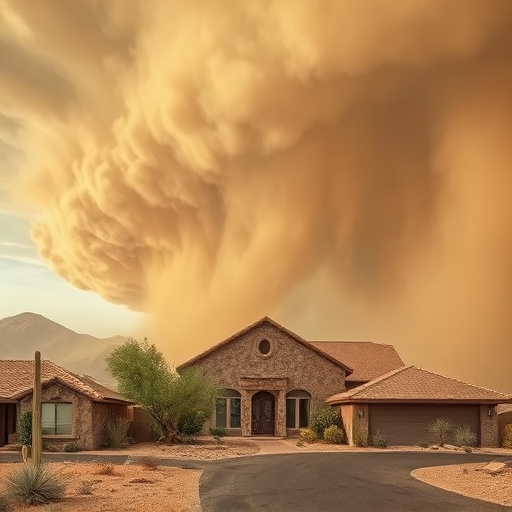
Oro Valley homeowners face a unique challenge during monsoon season: the potential for severe roof damage from powerful storms. As these storms can quickly leave a trail of destruction, understanding how to assess your roof's integrity after such an event is crucial. This practical guide will walk you through the essential steps to identify storm-related roof damage, from the telltale signs of lifted shingles and broken tiles to the often-overlooked issues like storm damaged flashing and parapets. By the end, you'll be equipped to make informed decisions about repairs, protect your home, and navigate the storm damage insurance claim process with confidence.
- Assess Storm Damage: Roof Inspection Tips
- Focus on Flashing & Parapets: Common Weak Spots
- Document and File a Claim: Your Step-by-Step Guide
- Repairs or Replacement: Understanding Your Options
Assess Storm Damage: Roof Inspection Tips

After a monsoon storm, assessing roof damage is a crucial first step. Before you call any roofer, take a thorough look at your property. Keep an eye out for storm damaged flashing and parapets-these are often overlooked but can be significant issues. Flashing, which seals the joints between roof materials, and parapets, the vertical structures at the edge of your roof, can be severely affected by strong winds and debris. Look for signs of peeling, corroding metal, or gaps where water could seep in. A local roofing company serving Oro Valley recommends taking photos of any suspected damage, noting the date, time, and specific locations. This visual record will be invaluable when you file an insurance claim.
Inspect your roof for lifted shingles and broken tiles, common indicators of wind exposure near Pusch Ridge or flying debris. The intensity of the storm and the specific type of roof you have will determine the extent of potential damage. Asphalt shingles are more prone to lifting and tearing during microbursts, while metal roofing may show signs of denting or punctures from hail or falling tree limbs. If you spot any significant damage, don't delay. Contact a reputable roofing contractor immediately; waiting until after the next storm could lead to interior leaks or even more severe damage.
When assessing your roof, don't overlook the underlayment, a protective layer beneath the shingles. Storms can lift the underlayment, creating gaps that allow water to enter. Check for any exposed or damaged underlayment and secure it if necessary. Also, be mindful of roof vents, skylights, and solar panels-all of which can be affected by heavy rain, strong winds, and falling debris. If you're unsure about any aspect of the inspection, don't hesitate to ask a professional. Filing a storm damage insurance claim can be complex, especially with a high deductible. Understanding the scope of the damage and having accurate documentation will help you navigate the process more smoothly. Remember, the goal is to protect your home and ensure your safety.
Focus on Flashing & Parapets: Common Weak Spots
Oro Valley homeowners often face unique challenges when assessing roof damage after a monsoon storm. Among the common weak spots are the flashing and parapets. These components, designed to seal the roof against water intrusion, are particularly vulnerable to wind damage and can be severely affected by flying debris.
During a storm, strong winds can rip off or damage flashing, creating openings that allow water to seep into the roof and eventually into the home. Parapets, which line the edges of the roof and protect against water runoff, can also be compromised. Scuppers, the small openings at the edge of the roof that direct water away from the foundation, are especially prone to damage from debris. A large hailstone could punch through a scupper, leading to significant water intrusion. Homeowners should inspect these areas carefully after a storm, looking for tears, holes, or dislodged pieces of flashing and parapets.
A licensed Arizona roofer recommends examining the entire roof surface and paying close attention to areas where the roof meets the walls, known as the flashing. If damage is suspected, it's crucial to document the issue with photographs, noting the extent of the problem and any visible signs of water intrusion. This information will be invaluable when filing a storm damage insurance claim. Remember, prompt action is essential to prevent secondary damage from flash floods or subsequent storms.
Document and File a Claim: Your Step-by-Step Guide

After a monsoon storm, assessing your roof for damage is crucial. Documenting and filing a claim with your insurance company is a critical step in the recovery process. Here's a step-by-step guide to help Oro Valley homeowners navigate this challenging time.
Start by thoroughly examining your roof. Look for lifted shingles, broken tiles, or any signs of widespread damage. Check for storm-driven rain leaks, particularly around the gutters and downspouts. Note any visible signs of hidden storm damage, such as interior leaks or discolored ceilings, which might indicate water intrusion from storm-damaged flashing and parapets. Keep in mind that hail damage can vary greatly by roof type, so look for dents, cracks, or missing shingles. Documenting these issues with clear photographs will be invaluable for your insurance claim.
Next, assess the condition of your underlayment. Storms can cause it to become damaged or lifted, creating potential entry points for water. If you suspect storm chasers (unscrupulous contractors who prey on storm damage) have been in your area, be extra vigilant. Check for any loose tiles or damaged parapets, which could be the result of flying debris or microbursts. If you notice significant damage to your roof vents, skylights, or solar panels, prioritize these repairs as they are integral to your home's structural integrity and energy efficiency.
Once you've documented the damage, contact your insurance company to file a claim. An experienced Oro Valley roof specialist can help you navigate the claims process and ensure you receive the necessary repairs. Keep records of all communication and photos of the damage for your records and the insurance company. Remember, it's essential to act quickly, as waiting for too long after a storm could impact your chances of getting a full claim approval, especially if there's a risk of a second storm before repairs can begin.
Repairs or Replacement: Understanding Your Options

After a monsoon storm, homeowners in Oro Valley often face the daunting task of assessing roof damage. This is especially true in areas like Rancho Vistoso, where wind exposure can be significant. When evaluating the extent of the damage, a critical distinction emerges: repairs versus replacement. Understanding this distinction is essential for making informed decisions and ensuring your home is protected effectively.
The first step in this process is to thoroughly inspect your roof, focusing on areas prone to storm damage, such as the flashing and parapets. Storm-driven rain and wind can wreak havoc on these components, leading to water intrusion. If you notice lifted shingles, broken tiles, or visible signs of flashing damage, it may indicate a more significant issue. Microbursts, localized, powerful gusts of wind, can cause substantial damage, and the repair process may require specialized techniques to secure loose tiles and protect against future storms.
In many cases, storm damage may be limited to a few loose shingles or minor flashing issues, which can be easily repaired. However, if the damage is extensive, involving multiple layers of roofing, underlayment, or even solar panels, replacement might be the best option. A licensed and insured professional, like those at DC Roofing of Arizona, can assess the situation and provide an accurate cost estimate for repairs or a complete roof replacement. Remember, waiting too long after a storm can lead to secondary damage, such as interior leaks or mold growth, further complicating the repair process. Acting swiftly, prioritizing safety, and seeking expert advice are key to navigating the aftermath of a storm and ensuring your home's integrity.
Frequently Asked Questions About a guide for Oro Valley homeowners on assessing roof damage after a monsoon storm
What should I do immediately after a severe monsoon storm? After a severe storm, the first step is to ensure your safety and that of your family. Check for any immediate hazards like fallen trees or power lines. Then, inspect your roof for damage. Look for missing shingles, water stains, or signs of leaks. Document any damage with photos for insurance claims. Contact a licensed Oro Valley area roofing contractor like DC Roofing of Arizona for a thorough assessment as soon as possible.
How can I tell if my roof has sustained damage? Look for visible signs like missing, cracked, or curled shingles; water stains on the interior ceiling or walls; or the presence of mold. Also, listen for unusual noises like squeaking or dripping sounds, which may indicate structural problems. If you notice any of these, it's crucial to have a professional inspection. A roofer with an Arizona ROC license can perform a comprehensive assessment to identify any damage.
What is the best way to file an insurance claim for roof damage? Review your homeowners insurance policy to understand your coverage for storm damage. Gather all necessary documentation, including photos of the damage, your policy details, and contact information for your insurance company. File your claim online or by phone. Keep records of all communication and documentation. A local roofing company can assist with the process and ensure you receive the necessary repairs covered by your policy.
Should I hire a professional to assess and repair my roof? It's highly recommended to hire a licensed and experienced Oro Valley roof specialist for both assessment and repairs. They have the expertise to identify subtle damage and provide accurate estimates. A professional roofer will ensure your roof is repaired correctly, extending its lifespan. Plus, they can help you navigate insurance claims and work with your insurance company.
What types of damages are typically covered by a monsoon storm insurance claim? Most homeowners insurance policies cover damage caused by severe weather, including storms. This typically includes missing or damaged shingles, roof leaks, and water damage to the interior of your home. However, the specifics vary by policy. Review your policy or consult your insurance company to understand what's covered. DC Roofing of Arizona can help clarify coverage details during the assessment process.
In the aftermath of a monsoon storm, Oro Valley homeowners must be vigilant in assessing roof damage. By focusing on crucial elements like flashing and parapets, commonly overlooked weak spots, you can ensure comprehensive inspections. Documenting storm damage, from lifted shingles to interior leaks, is essential for filing a well-documented insurance claim. Understanding the options for repairs or replacement, based on the severity of storm damaged flashing and parapets, allows you to make informed decisions. Next steps include contacting a trusted, licensed roofer, like DC Roofing of Arizona, for a thorough assessment and guidance tailored to your situation. This proactive approach ensures your home is protected, offering peace of mind during and after storm events.
After monsoon storms, Oro Valley homeowners must quickly assess roof damage, focusing on flashing and parapets. Look for lifted shingles, corroded metal, and gaps. Document damage with photos for insurance claims. Act promptly to prevent secondary damage and navigate complex claims process with expert help. Distinguish between repairs and replacements based on extent of damage.