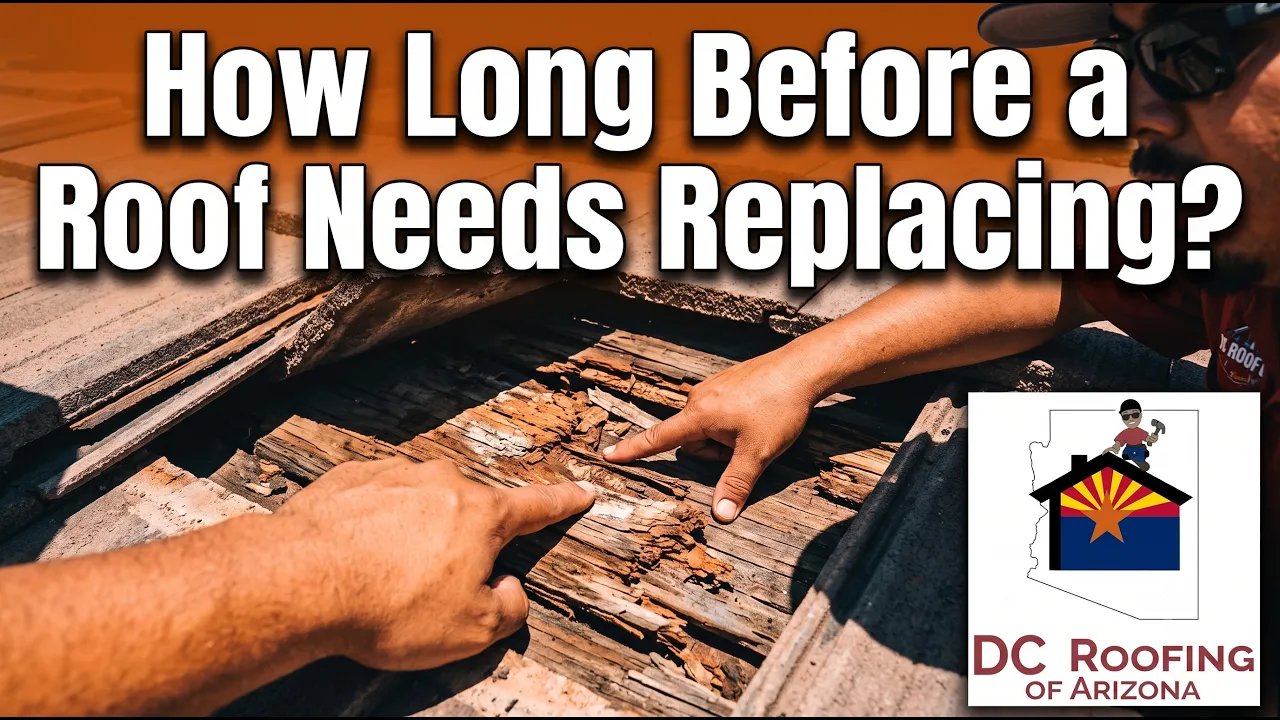
In Arizona, monsoon season shortens roof lifespan by 30% or more compared to national averages, because year-round UV exposure weakens sealants and underlayment, and then sudden thermal cycling, high winds, and ponding water from monsoon storms exploit those weaknesses. A tile roof that appears intact can have a failing underlayment after just 15 years.
- Monsoon season combines UV-weakened materials with sudden thermal cycling and storm forces, accelerating roof aging far beyond national norms.
- Underlayment and sealants often fail years before the visible roofing surface shows damage, leaving you unaware until a leak appears.
- Annual pre- and post-monsoon inspections can prevent 80% of roof failures by catching hidden deterioration early.
- Roofing systems like TPO with heat-welded seams and spray foam with no seams resist monsoon stress better than traditional materials.
- A roof that looks fine from the street may already need replacement; schedule a professional inspection to confirm its condition.
How Does Monsoon Season Shorten Roof Lifespan in Arizona?
Monsoon season shortens roof lifespan in Arizona by exposing roofing materials to a cycle of intense UV radiation, extreme heat, and sudden, violent storms that work together to degrade underlayment, sealants, and membranes years before the outer surface shows obvious wear. The Sonoran Desert’s relentless sun dries out shingles, breaks down tile coatings, and oxidizes flat-roof membranes throughout the year, leaving them brittle and vulnerable. When monsoon storms arrive, they deliver a one-two punch: rapid temperature drops that cause thermal shock, and driving rain that finds every weakened seam, crack, or pinhole.
According to Rosie on the House, Arizona’s heat and UV quietly break down roofing materials, and monsoon storms then exploit those weaknesses with wind, debris, and ponding water. The ABRC Tucson notes that repeated thermal stress and UV degradation are the primary accelerants, not just rainfall totals. High winds can tear off shingles and damage flashings, while flying debris punctures membranes, as B&M Roofing explains. A structured roof maintenance program can prevent 80% of roof failures by addressing these stressors before they compound.
What Is Thermal Cycling and How Does It Damage Roofing Materials?
Thermal cycling is the repeated expansion and contraction of roofing materials as they heat up during the day and rapidly cool at night or after a monsoon storm, and it damages roofs by cracking shingles, separating seams, and causing sealants to fail over time. In Tucson, daytime temperatures can soar above 100°F, only to plummet after a monsoon downpour or clear desert night. That swing can exceed 30°F in a few hours, forcing roofing components to move at different rates. Asphalt shingles become brittle and crack; membrane seams pull apart; metal flashings lose their bond with adjacent materials.
Research from Oak Ridge National Laboratory confirms that repeated thermal cycles accelerate fatigue in roofing assemblies, especially at joints and fasteners. In the desert, this effect is magnified because the base materials are already UV-damaged, so they have less flexibility to absorb the movement. ABRC Tucson points out that dust and grit can also abrade surfaces, creating micro-cracks that thermal cycling then widens. Installing proper attic ventilation reduces attic temperature extremes and can extend shingle life by 25, 40% by lowering the thermal load on the roof deck.
Why Does Underlayment Fail Before Your Tile or Shingle Shows Damage?
Underlayment fails before your tile or shingle because it is the hidden waterproof barrier that bears the brunt of heat, UV degradation, and moisture intrusion, and while the outer roofing material may still look intact, the underlayment can dry rot, crack, or delaminate without any visible clue from the street. Tile and shingle systems rely on a secondary layer of felt or synthetic underlayment to channel water away from the deck. In Arizona, that underlayment is subjected to oven-like attic temperatures and occasional moisture from monsoon leaks or condensation, which breaks down its fibers and adhesive over time.
Rosie on the House explicitly describes how tile roofs can look pristine while the underlayment underneath has already failed, leading to leaks that only appear after a heavy storm. The Sunvek article echoes this, noting that pre-monsoon inspections often uncover underlayment damage that homeowners had no idea existed. This is the critical hook: a roof that passes a visual curb-appeal check may be months away from interior water damage. For more on replacement timing, see our guide on when a roof needs replacing.
How UV Damage in Arizona Affects Different Roof Types
Arizona’s high UV index accelerates material breakdown differently across roofing types. The table below summarizes how each common system reacts to prolonged sun exposure and what warning signs to watch for.
| Roofing Type | Primary UV Effect | Visible Warning Signs | Lifespan Shortening |
|---|---|---|---|
| Asphalt Shingles | Drying and cracking of asphalt, granule loss | Curling, missing granules, brittleness | 15, 20 years instead of 25, 30 nationally |
| Concrete/Clay Tile | Fading and erosion of surface glaze; underlayment degradation | Cracked or chipped tiles, water stains on ceiling (underlayment failure) | Underlayment may need replacement in 15, 20 years, while tile lasts 50+ |
| TPO Membrane | Surface chalking and embrittlement | Cracking, seam separation, loss of reflectivity | 15, 20 years in desert vs. 20, 30 nationally |
| EPDM Membrane | Surface oxidation and shrinkage | Brittle surface, pulling away at edges, leaks at seams | 15, 20 years vs. 20, 30 nationally |
| Spray Foam | UV degradation of protective coating, leading to foam erosion | Bubbles, soft spots, exposed foam | Recoating needed every 10, 15 years instead of 15, 20 |
| Metal Roofing | Fading and minor expansion, but largely UV-resistant | Fading, minor oil canning; rarely leaks from UV alone | Minimal; 50, 70 year lifespan holds |
Sources: EPA UV radiation explains how UV degrades polymers and asphalt; ABRC Tucson and Rosie on the House detail desert-specific failure modes. A silicone roof coating can extend the life of flat roofs by 15, 25 years by shielding the membrane from UV and ponding water.
Can a Roof That Looks Fine Still Be Failing?
Yes, a roof can look perfectly fine from the ground while its underlayment, flashings, and sealants are already compromised, because the most critical waterproofing components are hidden beneath the visible surface and degrade silently from heat, UV, and moisture. Cracked pipe boots, dried-out valley metal, and separated TPO seams are all common findings during a professional inspection, even when the shingles or tiles above them appear intact. Monsoon winds can lift a tile just enough to let water reach a rotted underlayment, and the leak may not show up inside for weeks.
The ABRC Tucson stresses that dust, UV, and thermal stress create microscopic entry points that expand over multiple seasons. Sunvek recommends a professional assessment because “what you can’t see is what will cost you.” A comprehensive roof inspection from our team includes a written report with photos, so you know exactly where your roof stands before the next storm hits.
How Often Should You Schedule a Roof Inspection in Tucson?
You should schedule a roof inspection twice a year in Tucson: once before monsoon season to harden your roof against storms, and once after to catch any hidden damage before it worsens. The pre-monsoon visit (ideally in May or early June) allows us to reseal flashings, clear debris from drains, and repair any UV-related cracking that could turn into a leak during the first heavy downpour. The post-monsoon visit (September or October) uncovers damage from wind, hail, or ponding water that may not be obvious yet.
Tucson’s climate demands a two-visit maintenance schedule because the stressors are split between dry-season UV and wet-season storms. Our roof maintenance program is built around this rhythm and is designed to prevent 80% of roof failures. As Sunvek notes, catching a small flashing issue in June is far cheaper than replacing a water-damaged ceiling in August.
What Roofing Materials Best Withstand the Arizona Monsoon?
Roofing materials that best withstand the Arizona monsoon are those with seamless or heat-welded construction, high UV reflectivity, and flexibility to handle thermal cycling, such as spray foam roofing, TPO with heat-welded seams, and metal roofing with proper underlayment. Spray foam creates a monolithic, insulating layer with no seams for water to penetrate, and it delivers up to 30% cooling savings while lasting 20+ years. TPO roofing uses heat-welded seams that become stronger than the membrane itself, making it highly resistant to wind-driven rain and thermal movement.
Metal roofing, with its 50, 70 year lifespan and Class 4 hail resistance, shrugs off UV and monsoon debris, though it still requires a sound underlayment. For existing flat roofs, a reflective coating can restore UV protection and seal small cracks, extending service life by a decade or more. Each of these systems addresses the core monsoon threats differently, and the right choice depends on your roof’s slope and current condition.
Frequently asked questions
Is it possible to extend my roof’s lifespan with a coating after monsoon damage?
Yes, applying a high-quality coating after monsoon damage can extend your roof’s life by sealing surface cracks, restoring UV reflectivity, and preventing further water intrusion. The key is to address any underlying substrate damage first; a coating applied over saturated or delaminated underlayment will fail prematurely. A professional inspection will determine whether your roof is a good candidate for recoating rather than replacement.
How can I tell if my roof’s underlayment has failed without lifting tiles?
Without lifting tiles, you can look for indirect signs like water stains on ceilings, damp attic insulation, or granules collecting in gutters. However, a definitive diagnosis requires a professional to lift a few tiles and examine the underlayment directly. During a roof inspection, we use moisture meters and visual checks to identify failed underlayment before a leak becomes obvious inside your home.
Does homeowner’s insurance cover monsoon‑related roof damage?
It depends on your policy and the cause of the damage. Most standard policies cover sudden, accidental damage from wind, hail, or falling debris during a monsoon, but they typically exclude wear and tear or damage from neglected maintenance. We recommend documenting all storm damage with photos and contacting your insurer promptly; our team can help you navigate the claims process.
Can a single strong monsoon storm cause irreversible damage to an older roof?
Yes, a single intense monsoon storm can cause irreversible damage to an older roof that was already weakened by UV and thermal cycling. A microburst can tear off shingles, rip flashings, or puncture a flat membrane beyond simple repair. If your roof is near the end of its expected lifespan, one severe storm may be the event that forces a full replacement rather than a patch job.
What are the first signs that a roof is aging faster than normal?
The first signs are often subtle: curling shingle edges, visible granule loss in gutters, cracked sealant around vents and pipes, or a slight musty odor in the attic after rain. For flat roofs, you might notice ponding water that takes longer to drain or small blisters in the membrane. Any of these indicators warrants a professional inspection to assess whether the aging is superficial or structural.
If you’re concerned about your roof’s condition ahead of monsoon season, contact DC Roofing of Arizona at (520) 979-9095 for a free estimate and a thorough inspection. Our team is licensed, bonded, and insured (ROC #328733) and holds a 4.8★ rating from over 136 reviews.